The One-Page Emergency Medical Information Sheet Every Household Should Have
Medical emergencies rarely happen when we feel prepared for them. When something goes wrong, remembering medication names, insurance information, allergies, doctors’ names, or important medical history can suddenly become much harder than it sounds.
That’s why keeping a simple emergency medical information sheet can be so useful.
A one-page medical snapshot puts the information you may need most in one easy-to-find place. It can help you organize your own health information, give a caregiver or family member a quick reference, and provide important details to have available during an unexpected medical situation.
What Is an Emergency Medical Information Sheet?
An emergency medical information sheet is a concise record of the health and contact information that may be important during an emergency or medical visit.
Unlike a full medical binder—which can contain years of records, test results, appointment notes, and other documents—the goal of an emergency sheet is quick access.
Ideally, someone should be able to pick it up and quickly find essential information without searching through pages of paperwork.
What Information Should You Include on an Emergency Medical Information Sheet?
The best emergency medical information sheet is thorough enough to be useful but simple enough to scan quickly. You don’t need your entire medical history on one page. Focus on the information that could help someone understand your basic health needs and know whom to contact.
Personal Information
Start with basic identifying information such as your full name, preferred name, date of birth, phone number, home address, and blood type if you know it.
Emergency Contacts
Include at least two emergency contacts when possible. List each person’s name, relationship to you, and phone number. Make sure the people you list know they are your emergency contacts.
Healthcare Providers
Keep the contact information for your primary care provider and important specialists together. You may also want to include your preferred pharmacy and hospital.
Allergies and Reactions
List medication, food, and other significant allergies. When you know the type or severity of a reaction, include that information as well.
Current Medications
Include your current medications along with the dosage, how often you take each medication, and why you take it. Remember to update this section whenever a medication is started, stopped, or changed.
Insurance Information
Include your primary health insurance information. If you have secondary or supplemental coverage, include that too. Having both in one place can make it easier to locate the information when it’s needed.
Important Medical Information
Record major medical conditions or diagnoses along with medical devices or implants and any communication or accessibility needs that may be important.
Legal and Advance-Care Documents
If you have documents such as a healthcare power of attorney, living will, advance directive, or DNR order, note that they exist and where the current documents can be found.
Keep sensitive information in mind: Your medical information sheet contains personal health information. Store physical and digital copies somewhere reasonably secure while still making sure the people who may need the information know how to access it.
Who Should Have an Emergency Medical Information Sheet?
An emergency medical information sheet isn’t only for someone with a complicated medical history. Almost anyone can benefit from having important health information organized before it’s needed.
It can be especially helpful for:
Older adults
People who take multiple medications
Anyone living with chronic health conditions
Parents organizing medical information for their children
Caregivers managing information for someone else
People with serious allergies
Anyone with implanted medical devices or other important medical considerations
People who travel frequently
Households that simply want to be better prepared
Even if your medical history is relatively simple, having your medications, allergies, emergency contacts, insurance information, and healthcare providers together can save you from trying to gather everything at the worst possible time.
Where Should You Keep Your Emergency Medical Information?
Creating the sheet is only useful if it can actually be found.
Consider keeping a printed copy in an easy-to-access location at home, such as at the front of your medical binder or with other important household information. If a trusted family member or caregiver might need to locate it for you, make sure they know where it is.
You may also want to keep a secure digital copy that you can access from your phone or another device when you’re away from home.
If you carry a copy with you, remember that the sheet contains personal health and insurance information. Balance easy access with privacy and security, and avoid leaving copies where they could be unnecessarily exposed.
Don’t Forget to Update It
An outdated medical information sheet can create confusion instead of preventing it. Review your information whenever you have a significant change in medications, insurance, healthcare providers, allergies, diagnoses, or emergency contacts.
Even when nothing major has changed, periodically checking the page is a good habit. Add a “Last Updated” date so you can quickly tell when it was last reviewed.
Make It Easier with the Free Emergency Medical Snapshot
You don’t have to build your emergency information sheet from scratch.
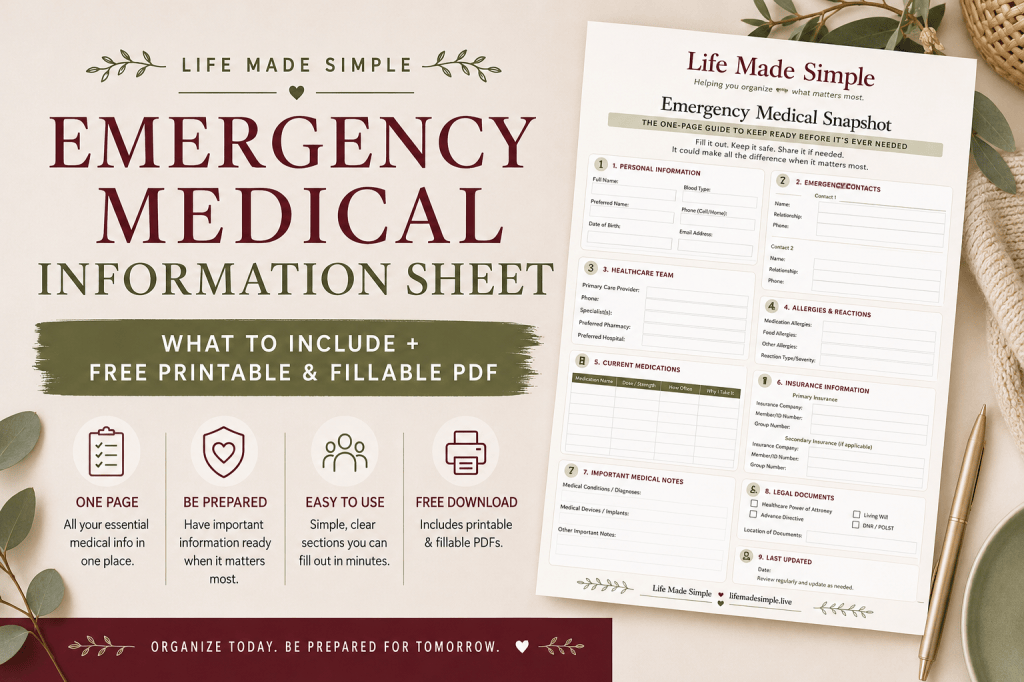
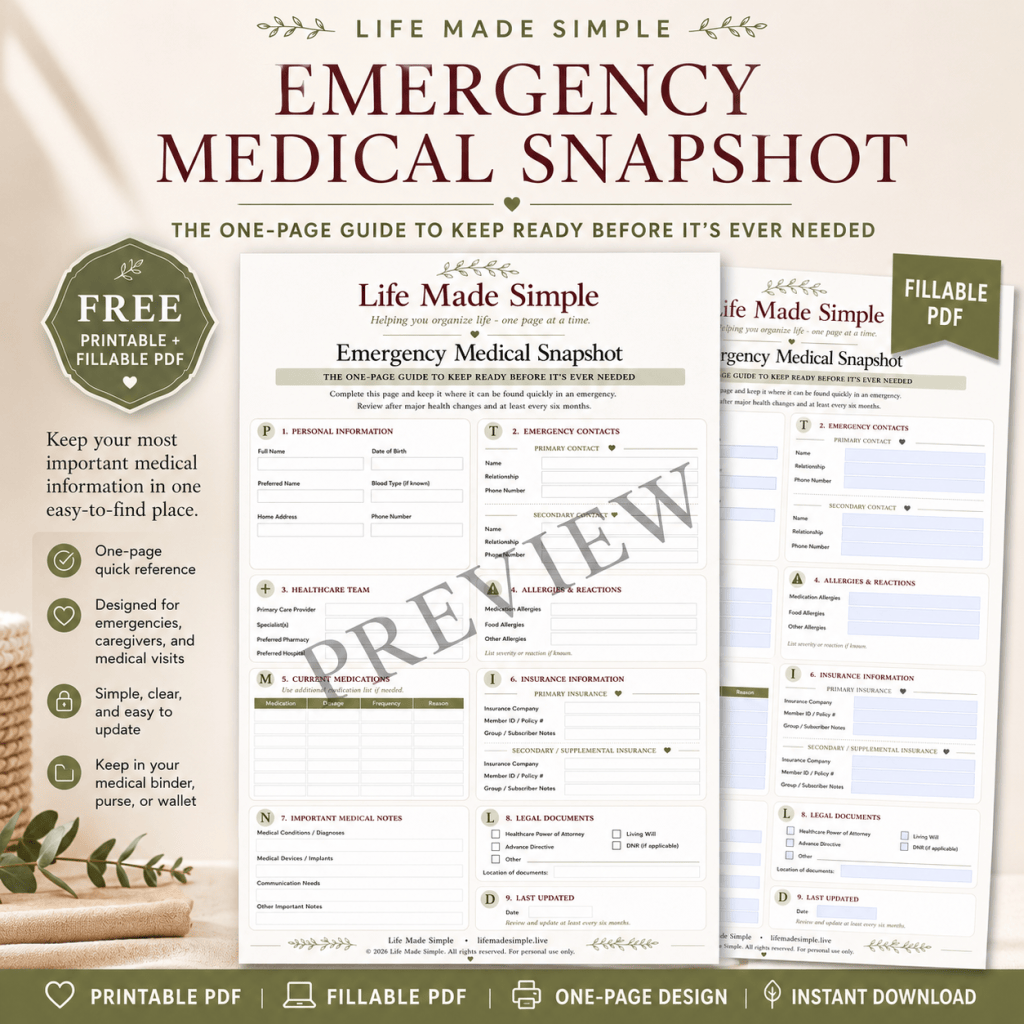
I created the Life Made Simple Emergency Medical Snapshot to give you one organized page for the essential information we’ve covered above.
The free download includes two versions:
Printable PDF — print it and complete it by hand.
Fillable PDF — type your information directly into the form, save it, and print a copy if you’d like.
The Snapshot includes space for emergency contacts, healthcare providers, allergies, medications, primary and secondary insurance, important medical notes, legal documents, and more—all on one page designed for quick reference.
Free download • Includes printable + fillable PDFs
A Little Preparation Can Make a Difficult Moment Easier
None of us can plan for every emergency. But we can make important information easier to find before we need it.
Taking a few minutes to organize your medical information now means you won’t have to rely entirely on memory—or ask someone else to piece it together—during an already stressful situation.
Complete your emergency medical information sheet, tell someone you trust where to find it, and make updating it part of your regular routine.
It’s a small bit of preparation that can make life a little simpler when life suddenly becomes anything but simple.
Want to Organize More Than the Essentials?
The Emergency Medical Snapshot is designed for the information someone may need quickly. But medications change, appointments happen, test results accumulate, and there may be much more medical information worth keeping organized.
The Life Made Simple Medical Information Organizer gives you one place to keep your broader medical information together, including medications and medication changes, healthcare providers, appointments, tests and results, insurance information, important documents, and care instructions.
This article and the Emergency Medical Snapshot are provided for general informational and organizational purposes only. They are not intended to provide medical advice, diagnosis, or treatment or to replace guidance from a qualified healthcare professional. In an emergency, contact the appropriate emergency services.

 Life Made Simple
Leave a comment