
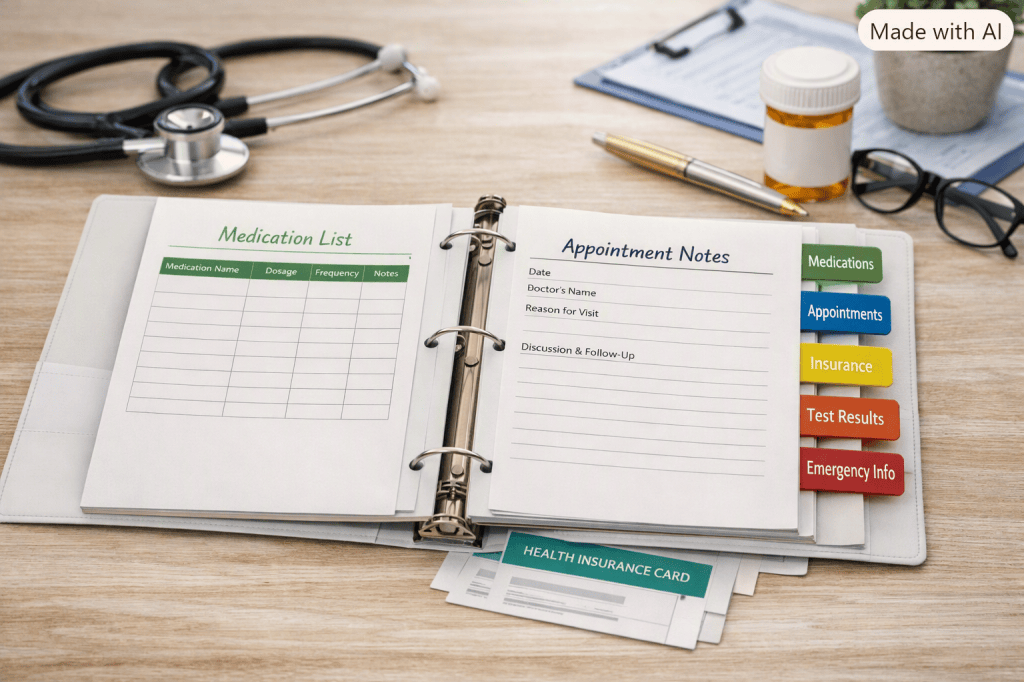
Whether you are just trying to organize your medical information into one place, setting up your home office, have chronic illness that seems to be scattered between various specialists, or you are the primary caregiver for someone else, a medical binder can simplify your life and provide peace of mind.
Medical care often involves multiple doctors, medications, tests, insurance companies, and unexpected emergencies. A medical binder helps you:
- Quickly answer doctors’ questions
- Avoid medication mistakes
- Track important test results
- Prepare for appointments
- Help family members advocate for you if you cannot speak for yourself
- Reduce stress during emergencies
Think of a medical binder as your personal health command center.
Supplies you need (keep it simple):
- 1 three-ring binder (1-2 inches is usually enough)
- Tab dividers
- Plastic sheet protectors
- A few zip pockets or envelopes
- Pens/highlighters
- Current medication list printed and updated regularly
Optional:
- Digital backup folder (I love this because it makes updating the lists so much simpler)
- USB drive (encrypted if storing sensitive information)
- Cloud folder (with strong password protection)
Medical Binder Sections:
Section 1: Important Information
This is the information someone should see FIRST.
Include:
Personal Information
- Full name
- Date of birth
- Address
- Phone number
Emergency Contacts
- Primary contact person
- Relationship
- Phone number
- Secondary contact person
- Relationship
- Phone number
Healthcare Providers
Include address & phone number for each
- Primary care doctor
- Specialists
- Pharmacy
- Preferred hospital
Insurance Information
- Insurance company
- Member ID
- Group number
- Customer service phone number
- Who the actual subscriber is (could be spouse, not the patient)
- Copy of insurance card—front & back
Emergency Notes
Examples:
- Allergies
- Blood type
- Major diagnoses
- Medical devices
- Important limitations
- Note any legal directives—copies should be included in this binder
- DNR (do not resuscitate)
- Advanced Directive
- Living Wills
- POA (power of attorney)
Section 2: Medication List
This is one of the most important sections!
Include:
Also include:
- Vitamins
- Supplements
- Over-the-counter medications
- Allergies and reactions
- If person is taking any non-prescriptive substances, these should be noted since they can impact effectiveness of any anesthesia
| Medication | Dose | When Taken | Why You Take It |
| EXAMPLE: Plaquenil | 200 mg | Morning | Autoimmune |
Update these whenever medications change.
TIP: Bring this list to every doctor appointment
Section 3: Medical History
Create a timeline.
Include:
- Diagnoses
- Surgeries
- Hospitalizations
- Major illnesses
- Procedures
- Significant injuries
Example:
2018
- Gallbladder removed
- Surgeon: __________
2024
- Diagnosed with ______
- Doctor/specialist: _____
A timeline helps doctors understand the bigger picture.
Section 4: Doctor Information
Keep a page for each provider.
- Doctor Name
- Specialty
- Office phone
- Address
- Last visit
- Next appointment
Helpful additions:
- Questions to ask at next visit
- Notes from appointments
Section 5: Test Results
Keep important results, not every piece of paper
Examples:
- Bloodwork trends
- Imaging reports
- Biopsy reports
- Cardiac tests
- Bone density scans
- Specialist evaluations
A helpful trick: write the date at the top of each report and highlight:
- Abnormal findings
- Recommendations
- Follow-up dates
Section 6: Insurance & Billing
This section can save money and headaches
Include:
- Insurance cards (copies)
- Explanation of Benefits (EOBs)
- Bills needing attention
- Payment plans
- Contact information
- Who you personally spoke with, date & time
Not sure what all those numbers on an EOB actually mean? My simple guide to understanding your Explanation of Benefits explains the allowed amount, insurance adjustments, deductible, copay, coinsurance, and what you may actually owe.
Keep medical bills until resolved.
Section 7: Appointment Notes
Before appointments, write:
My Concerns:
1.
2.
3.
Questions:
- What does this result mean?
- What are my treatment options? Benefits? Side effects?
- What symptoms should I watch for?
- When should I follow up?
During the appointment:
- Write answers
- Record instructions—I use a phone app to audibly record visits
- Note medication changes
- Ask questions THEN if you are not sure whether changes should be made or are not clear as to why this change is recommended
Section 8: Advance Care Planning
Great for legal paperwork. You want your wishes to be abundantly clear for anyone who needs to know.
Include:
- Advance Directives
- Healthcare POA (Power of Attorney)
- Living Will
- DNR checklist (Do Not Reuscitate)
- Any other legal paperwork pertaining to medical issues
Section 9: Caregiver Information
Especially helpful for aging parents or chronic illness.
Include:
- Daily routines
- Mobility needs
- Dietary restrictions
- Communication preferences
- Important personality/preferences
- Knowledge about ADL’s (Activities of Daily Living)
Example: “Prefers written instructions because medical conversations can feel overwhelming”
**What NOT to Put in Your Medical Binder!!!
Avoid keeping:
X Every prescription label ever received
X Old appointment reminders
X Unimportant paperwork
X Duplicate copies of everything
Too much information makes it harder to find what matters
**How Often Should You Update Binder??
A good routine
Monthly
- Review medication list
After every appointment
- Add notes
- Update changes
Every 6 months
- Remove outdated papers
- Review Emergency Contacts
The “Emergency Medical Snapshot”
Consider making a single one-page summary that stays at the front:
MY MEDICAL SNAPSHOT
- Name
- Date of Birth
- Allergies
- Diagnoses
- Medications
- Doctors
- Emergency Contact
- Pharmacy
- Insurance
- Blood Type
This is the page a paramedic, ER nurse, or caregiver can use quickly.
A Simple Way to Remember It:
M.E.D.I.C.A.L. Binder
M—Medications
E—Emergency Information
D—Doctors
I—Insurance
C—Conditions & History
A—Appointments
L—Lab results
NOTE: I am putting the finishing touches on my FREE Emergency Medical Snapshot printable. Join my email list to be the first to receive it!
 Life Made Simple
Leave a comment